CEAPRED’s Statute has provided the provision of appointing Patron to the Founder Chairperson of Center in its Section-4, Clause 11 which is the Centers’ most apex position. This position is expected to serve for the substantial contribution to CEAPRED’s growth and impact. Serving on a voluntary basis, the Patron provides strategic guidance to the Executive Committee and staff, promotes the organization’s credibility and visibility, supports institutional development and expansion, and advises on enhancing operational effectiveness and efficiency. The Patron also upholds CEAPRED’s values, encourages collaboration with government, development partners, and civil society, and deals with the long-term priorities and sensitive institutional matters.
The Executive Committee, elected every four year through the General Assembly, is responsible for governing the organization, setting policies, and defining broad strategic goals. The Chairperson of the Executive Committee serves as the Chief Executive of the Center, leading the Committee and ensuring alignment of the Center’s operations with its mission. The Chairperson and other incumbents of the Executive Committee serve voluntarily and provide oversight, guidance, and governance support.
The Executive Director manages the day-to-day planning, execution, and monitoring of the Center’s activities and supports the Chairperson in implementing strategic priorities. The Executive Director is assisted by a dedicated team of professional and support staff, ensuring efficient and effective delivery of CEAPRED’s programs and services. In addition, the Executive Director oversees program development, ensures compliance with organizational policies and legal requirements, manages budgets and resource allocation. The Executive Director also facilitates coordination among departments, strengthens partnerships with stakeholders, represents the Center in relevant forums, and provides leadership in capacity building, staff development, and institutional learning. Further, per the Statue of center, the Executive Director also serves as the Member Secretary to the Executive Committee.

Treasurer
Master’s in Plant Pathology, Agronomy, University of the Philippines, Los Banos.
bharat.upadhyay@ceapred.org.np
Mr. Upadhyay is a recognized agricultural specialist with about 50 years of experience in organization and program management, and managing coordination and linkage with a diverse group of government, non-government, private sector organizations and the donors (USAID, SDC, DFID/UKAID, JICA, ADB, World Bank, IMF, DANIDA, EU and others). From CEAPRED working as the Executive Director, Mr. Upadhyay brings excellent team leadership, program management capabilities and extensive knowledge of the functioning with diverse organizations, and is competent to bring-in crosscutting perspectives to program designing and execution. Currently, he has been working as DCOP/Ag in USAID/KISAN II. He started his carrier as Research Officer in the Plant Pathology Division at Nepal Agriculture Research Council (NARC) in 1972 and got retirement from GON's civil service as Director General of DoA in 2008.

Member
MBA, LLB (TU)
Mr. Bed Bhattarai has been associated with CEAPRED since 2022 as an Institutional Development Advisor, and Executive Director afterwards. He was elected as an Executive Member in April 2024. He is a former secretary of the National Human Rights Commission of Nepal and also served as the National Project Director of UNDP Projects. He served as a lecturer. He is an advocate and member of the Nepal Bar Association. He is the author of the book — ‘Depth of Human Rights: Some Incidents and Challenges’. In 2014, Mr. Bhattarai was recognized for his strong leadership by UN-OHCHR ICC-SCA, Geneva. He won a cash prize from the Government of Nepal and received appreciation letters for excellent financial regularities among the ministries including all state agencies in 2014, 2018, and 2019.
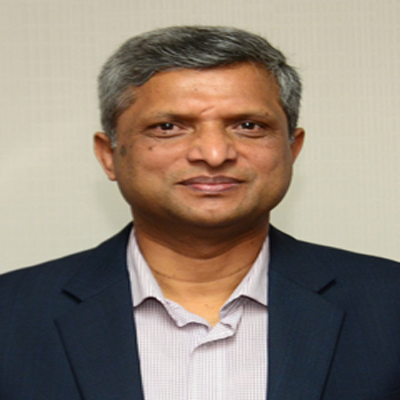
Member
MA in Development Studies
Mr. Kharel is a development planning and policy professional with over twenty-five years of experience in Nepal’s public sector, including more than a decade with the National Planning Commission. He has been instrumental in formulating national plans and policies on agriculture, food security, and poverty reduction. In addition, Mr. Kharel has worked with the United Nations in Afghanistan, Liberia, and Timor-Leste, supporting governance and institutional development in post-conflict settings. He holds a MA in Development Studies from the International Institute of Social Studies, Netherlands

Center for Environmental and Agricultural Policy Research, Extension and Development (CEAPRED)


